
Please Make Way for a New Era of Kitchen
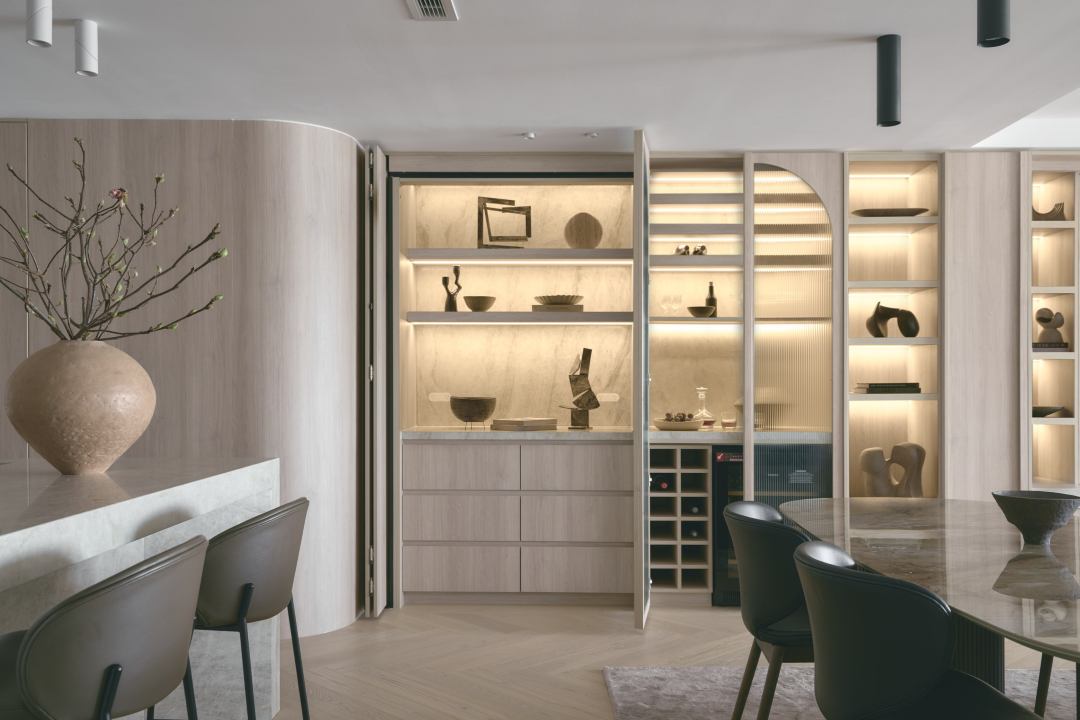
Take a moment to think about your kitchen. To truly think about how you live within its walls. How do you cook? Where do you store your cutlery? Do you entertain guests? How does your family use the space? Each answer is different, reflecting the ways kitchens have evolved alongside changing lifestyles and family needs. So, when asked to explore kitchen design trends, Damian Aziz, the general manager of Dimensions Joinery, had plenty to reference. But as Sydney Kitchen & Bathroom’s Alice O’Brien discovers through her conversation with Aziz, a kitchen designed to its owners’ lifestyle will be one that forever remains timeless.
Nearly 30 years ago the idea for Dimensions Joinery was founded. Built on the stable pillars of workmanship, reliability and long-term client relationships, Aziz is proud to say the foundation remains unchanged today. Taking pride in all the projects the team undertakes, Aziz is uncompromising when it comes to quality craftsmanship. Whether it’s a lesson passed down from his father, the founder of Dimensions Joinery, or maybe it’s simply part of the DNA of this family-owned business, quality has always come first. The journey of a once humble joinery operation has seen the business grow into one specialising in providing high-quality residential joinery, with a particular interest in kitchens. With nearly three decades of experience, few are better positioned to reflect on how kitchens have evolved over the years.
THE ERAS OF THE KITCHEN
Kitchen design evolution reflects the changing technology, culture and lifestyles that have shaped the way we live. Looking back through history, we can trace how kitchens have adapted alongside the changing needs of society. The medieval open-hearth kitchen was shaped by pure practicality, while the 18th century saw the kitchen become a dedicated space designed around cooking. The Industrial Revolution transformed how we prepared food with the introduction of running water and gas supply, before the mid-20th century shifted the kitchen from a purely functional space into a place for connection and gathering within the home.
And that brings us to today, where the phrase the kitchen is the heart of home has become almost universal. Each era has been influential in kitchen development, but Aziz identifies the “modern open-plan era from the late 1990s” as one of the most influential periods, seen throughout modern kitchens, he explains that “this period changed the way people think about kitchens.”
“That shift influenced everything: island benches became larger, cabinetry became more furniture-like, appliances became more integrated and finishes became more refined,” Aziz explained.
Today, kitchens are expected to serve multiple purposes: a social hub, a cooking space and a place for families to connect. Therefore “functionality has become just as important as the appearance,” Aziz says, noting that this is why homeowners are moving “towards concealed functionality” as there’s a greater need for simple, cleaner lines for a busy multi-purposed space. Aziz believes today’s kitchens represent what he calls the “modern Australian kitchen era,” combining function, craftsmanship and lifestyle. But how can a kitchen cater to such modern societal needs?
INTRODUCING THE SMART KITCHEN
Enter the smart kitchen: where technology meets the evolving needs of modern living. When the term ‘smart kitchen’ is mentioned, many immediately picture a space powered by technology, designed to make everyday life easier. From the quick voice activated oven timer to touchless faucets, it’s easy to think a smart kitchen is merely utilising technology to simplify tasks.
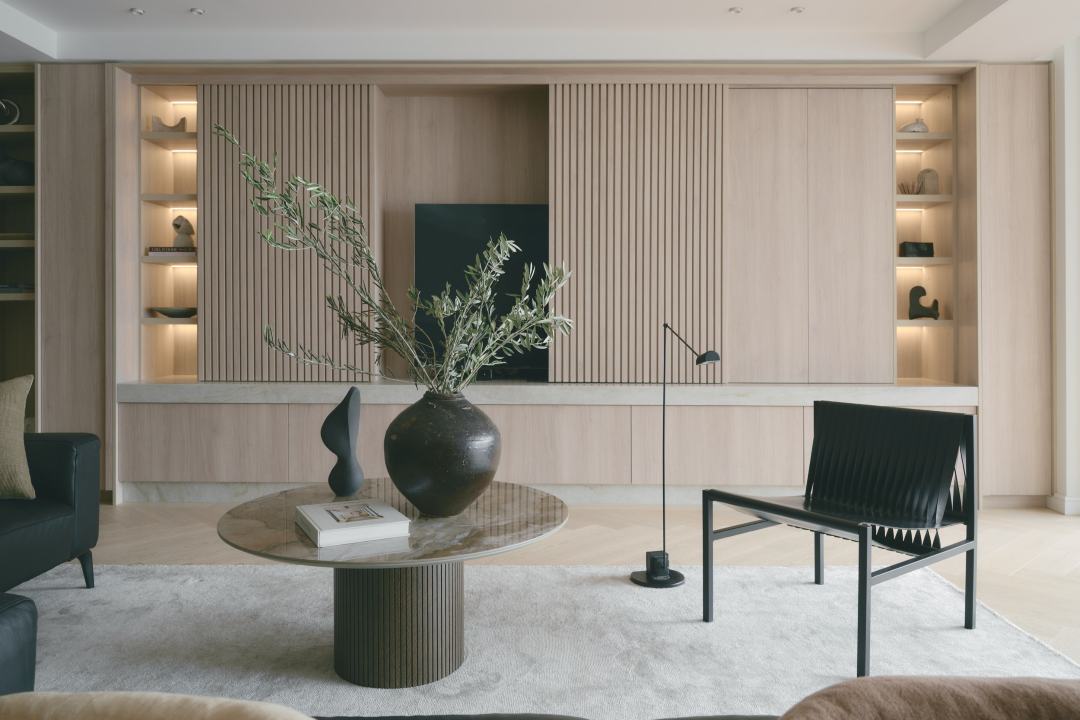
For Aziz, however, a smart kitchen extends far beyond technology alone. More than “integrated lighting, charging points, appliance garages, touch-to-open cabinetry, quality drawer systems, smart ovens or fridges … it also includes simple things like good bin placement, practical pantry access and enough bench space around the cooking and preparation zones.”
It’s a careful balance between incorporating technology strategically without overcomplicating the space. Aziz is more than aware that “some features sound impressive, but they need to be practical, reliable and easy to maintain.” So, how do you decide what smart technology to include?
For Aziz, some of the most exciting advancements aren’t necessarily the most visible he emphasises, “the hardware that improves everyday use: high-quality soft-close drawer systems, internal organisers, corner solutions, lift-up mechanisms, pocket door systems and integrated LED lighting … in appliances, we are seeing more demand for integrated fridges, induction cooktops, combination steam ovens, smart ovens and rangehoods that are either concealed or designed to blend into the cabinetry.”
But incorporating these smart technology options comes down to a combination of thoughtful pre-planning between the designer, joiner, builder, electrician and other tradespeople.
Outlining how the team at Dimensions Joinery ensures early planning success, Aziz explains that the team “works through how the client uses the kitchen, where they charge phones or tablets, where small appliances will live and where lighting will be most useful.”
This detailed planning ensures every element has a purpose:
For charging stations: “We might design a dedicated drawer, appliance cupboard or hidden nook with access to power.”
For integrated lighting: “We allow for wiring channels, sensor locations and suitable cabinetry details.”
For smart appliances: “We need to consider ventilation, clearances, power requirements and easy access for servicing.”
More than saving your precious time and energy, a smart kitchen saves energy for our environment, and in a society where sustainability is no longer just a trend but a necessity, a well-designed kitchen is one built to last. Sustainable design is not limited to products or using energy-efficient appliances or LED lighting, but it comes down to “designing something that will not be ripped out in a few years because it no longer works for the household.”
Smart kitchen design represents the next era of the kitchen, becoming “more integrated and less obvious” as time goes on. Aziz believes “the best smart kitchens will be the ones that feel simple to use, even though there is a lot of thought and technology behind them.
WORKING WITH, NOT TO THE TRENDS
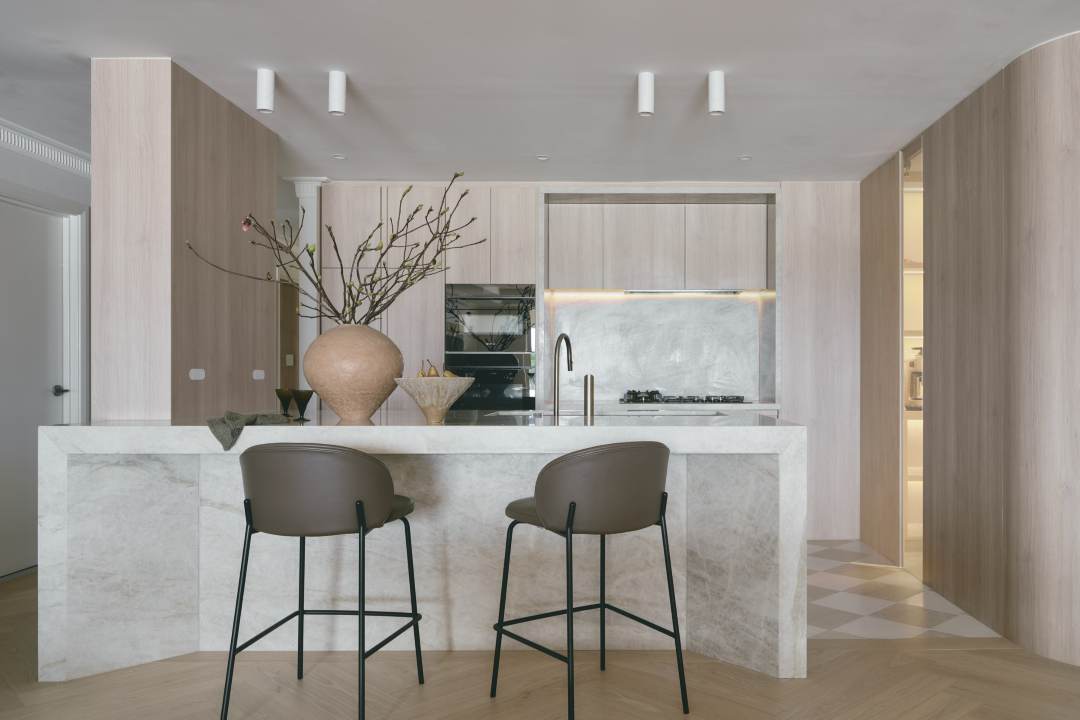
The smart kitchen may represent the next era of kitchen design, but how do homeowners personalise this evolving approach? A sense of individuality can be found within the finishes, with popular choices including natural-looking timber veneers, slim shaker profiles, textured boards, fluted details, soft matte finishes and stone-look porcelain. For those wanting to make a statement, some homeowners are pairing darker cabinetry with lighter benchtops to create contrast through elevating visual depth.
But when it comes to creating a timeless kitchen, rather than one dictated by passing trends, Aziz says it “usually comes down to good proportions, quality materials and avoiding design choices that are too extreme.” Instead, he recommends incorporating trends through “handles, lighting, stools or styling, which are easier to change later.”
Dimensions Joinery aims to keep the main cabinetry, layout and colours balanced giving space for the smaller touches of personality, such as gold framed handles or deliberately chosen styling, to stand out. With a strong design foundation built effortlessly around the way families live, Aziz ensures Dimensions Joinery prioritises a practical kitchen, as it will feel and remain relevant over time.
Because while colours, finishes and styles will inevitably change as kitchen design eras come and go, Aziz knows that “a good layout will outlast any trend … with room for the way your family may grow or change over time.”
Images courtesy of Dimensions Joinery and Interiors